
It's occult, but its no secret! Lessons for home gardeners from chemical free meadow restoration
A cult? No, we said "occult!" That’s right, from the latin root occultus meaning hidden, secret, covered… but don’t worry, its not as ominous as it sounds.
Occultation for Weed Control and Our Experience with Meadow Restoration
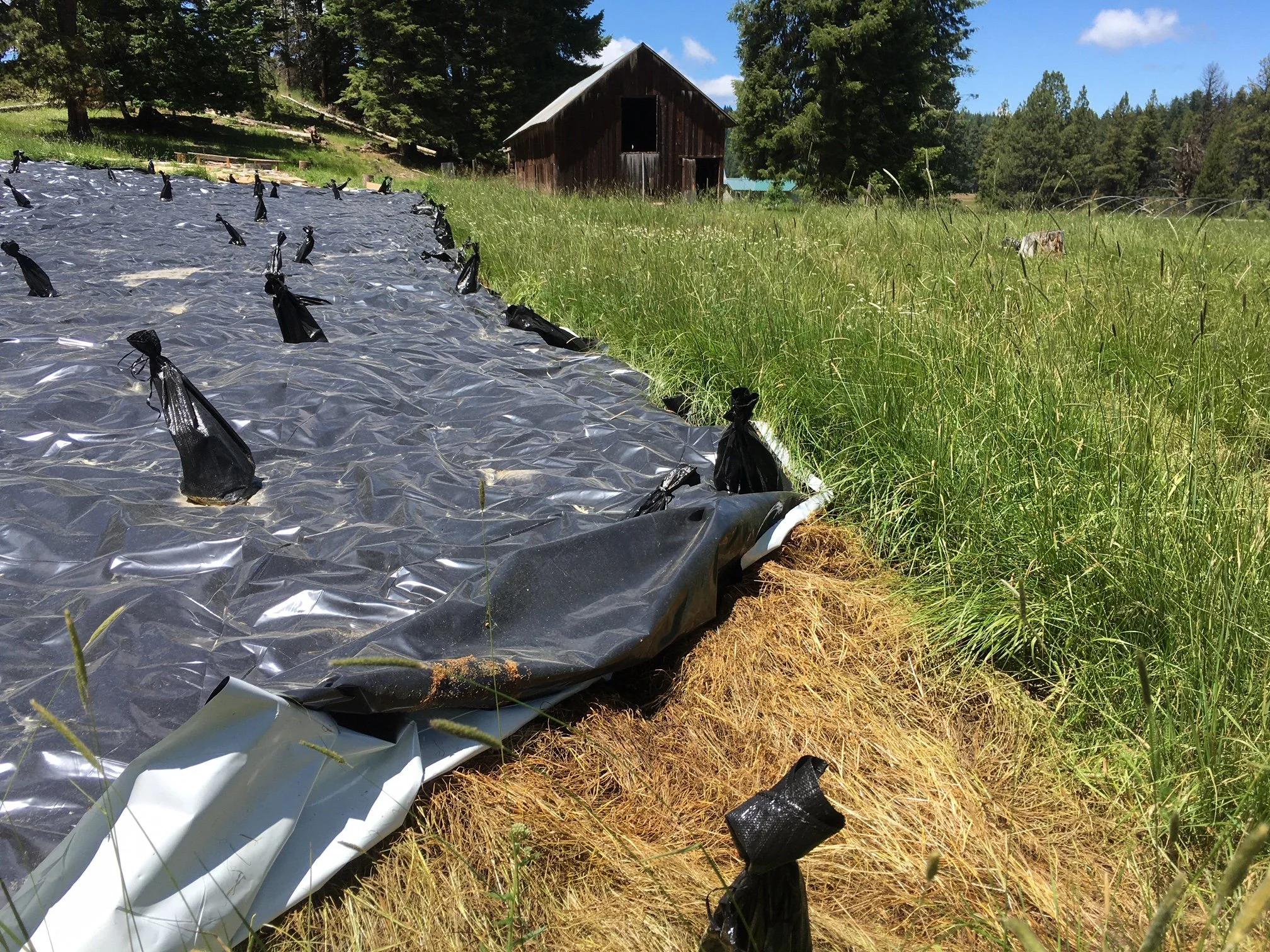
The very first tarp laid at Vesper Meadow in the mid summer of 2019, already working well at suppressing the non-native livestock pasture grass, Alopecuris pratensis aka Meadow Foxtail. We have been using the same tarps ever since!
Occultation is a non-chemical weed-control technique that uses a dark, opaque cover to block sunlight from reaching the soil. In traditional farming, occultation is especially useful for preparing beds between crops and can help reduce weed pressure while protecting soil structure and avoiding herbicides.
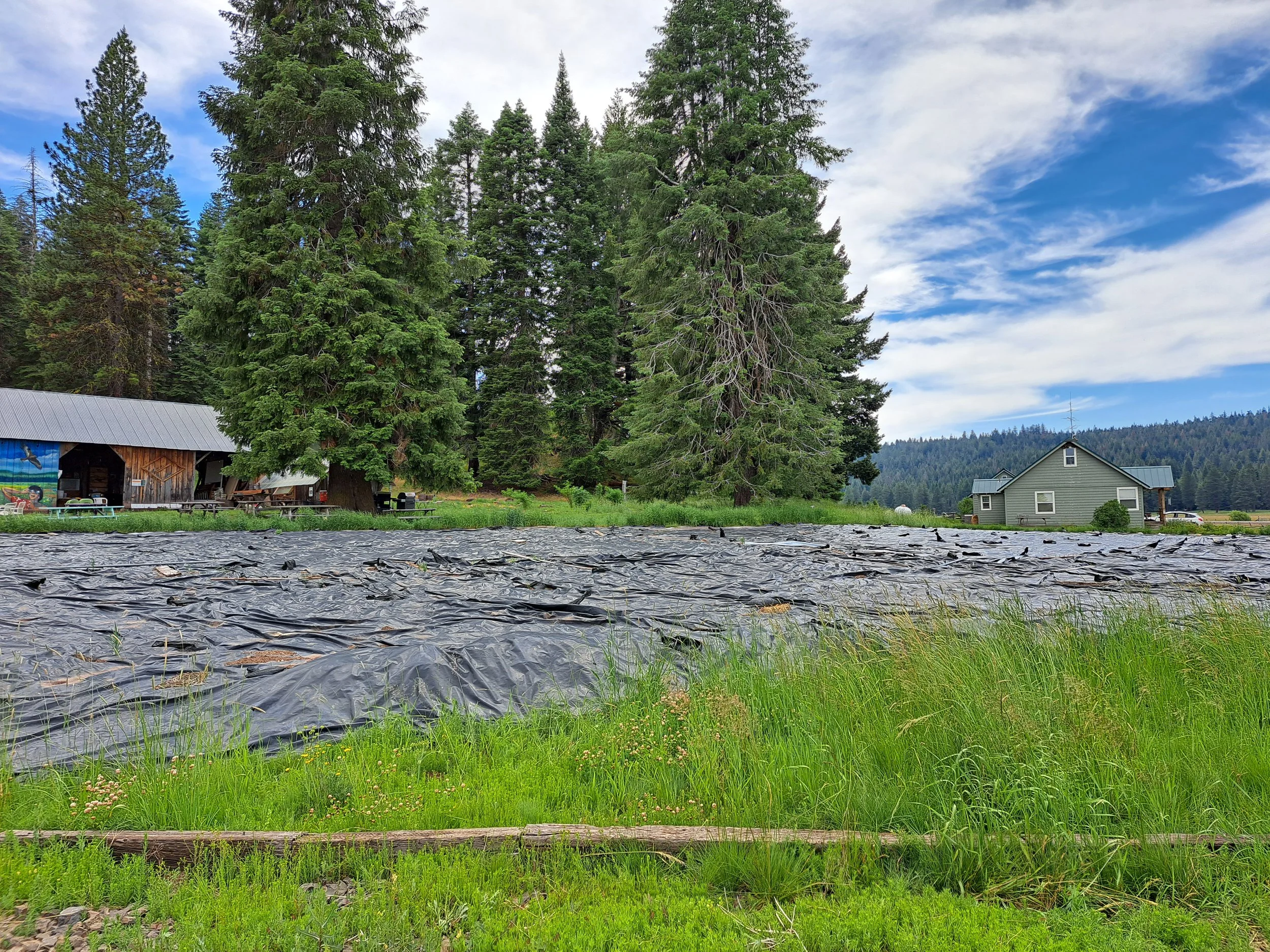
We utilize large tarps at Vesper Meadow, but they can be purchased smaller or cut to any size.
We have adapted this agricultural technique for meadow restoration to replace the nonnative perennial pasture grasses with the native bunchgrasses and forbs that are indigenous to the place. This work supports multiple goals we have for the land; improving habitat for imperiled species like the Oregon Vesper Sparrow and Klamath Mardon Skipper, bringing back Indigenous First Foods and building further restoration projects with Tribal partners, generally improving pollinator habitat, engaging the public in hands-on restoration practices and sharing it with wide audiences for a message of hope and community unity.
We purchase our “silage” tarps conveniently from Farmers’ Friend. The cover is placed over a prepared bed or growing area for several weeks), preventing photosynthesis and encouraging weeds to germinate and then die without light. They key in this step is to make sure the tarp is well secured with weights, sandbags, or other heavy materials that keep it tacked down on all edges and throughout the entire area.. We have at times had issue with strong winds that balloon up beneath the tarp and move it around. We also recommend making sure the weights do not have any sharp edges that will puncture the tarp (but if it does get punctured, you can get tarp-specific tape also from Farmers’ Friend).
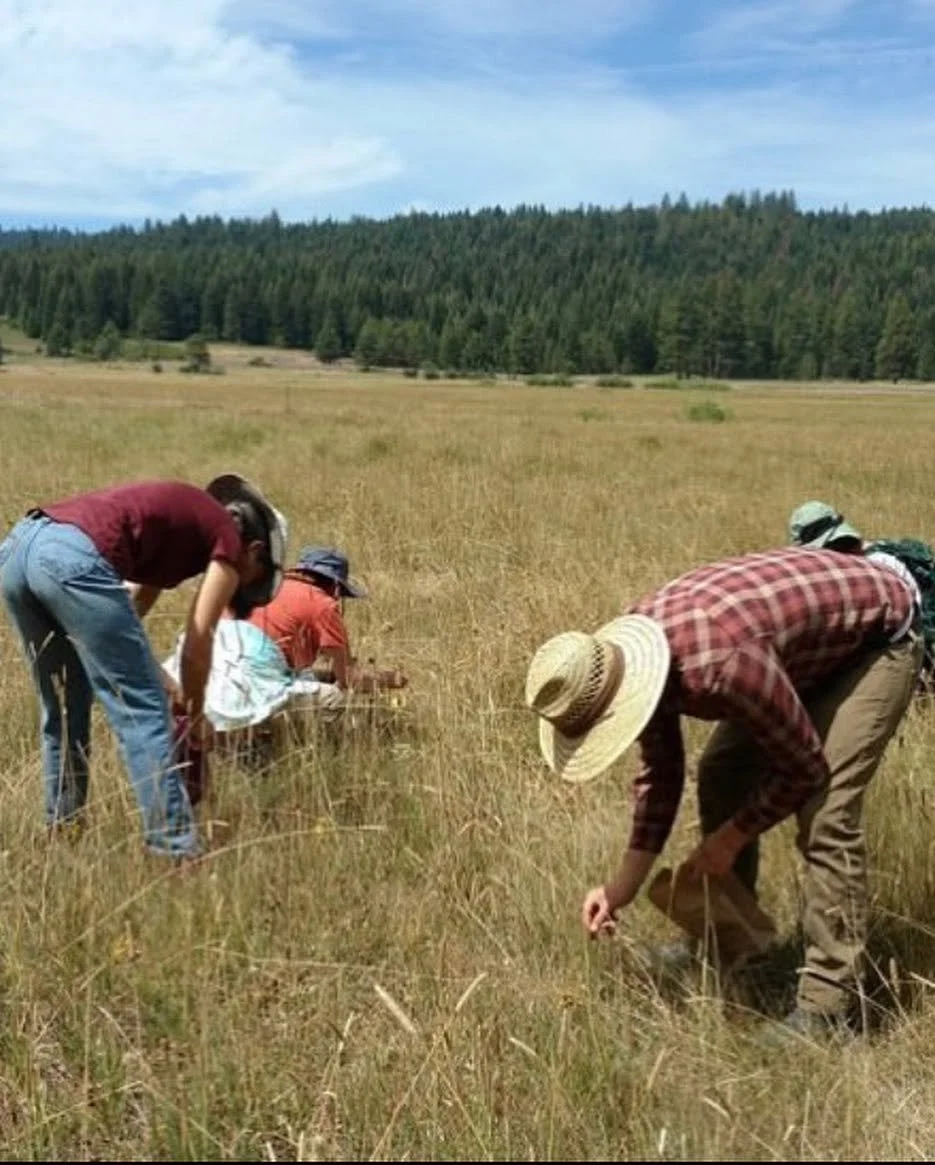
Each year June - September, volunteers, students, and interns collect native grass and forb (flowering plant) seeds on meadow walks that are then stored for fall dispersal in the areas that are tarped all summer long. We focus on seeds that are gathered onsite for preservation of local genetics and adaptivity to site.
Over the last several years at Vesper Meadow, we have been leaving the tarps on the ground for a whole year long so that (1) the tarps really help heat up and kill the roots of the nonnative pasture grasses and (2) because we have extra large (5000 sq ft) tarps that we don’t want to store elsewhere in the winter. After the cover is removed, the nonnative perrenial lifestock grasses have been smothered. Many weedy annuals do spring forth from the seed bank the following year, and to deal with them we have been generally pulling those by hand for the first two years.
We usually seed by hand with volunteer support, just utilizing hands, feet and rakes to lightly cover a mix of native seeds in the soil. We collected a couple pounds of seed on site each year and supplement with more local seed from our colleagues at the Rogue Native Plant Partnership.
The trickiest part of the whole process is preparing the site for seeding where the nonnative pasture grasses run thick and deep in the first 6-8 inches of top soil. We have burned, raked by hand and by tractor, dug sporadic holes, and various combinations of these preparations in different sites over the years. We’ve had varying success with seed germination and weed suppression - each time learning something new and nuanced related to the site’s specific conditions. Our biggest recommendation is to stick with it and know that the whole process will be part of your relationship building with a place.
Check out some pictures of our results over the years:
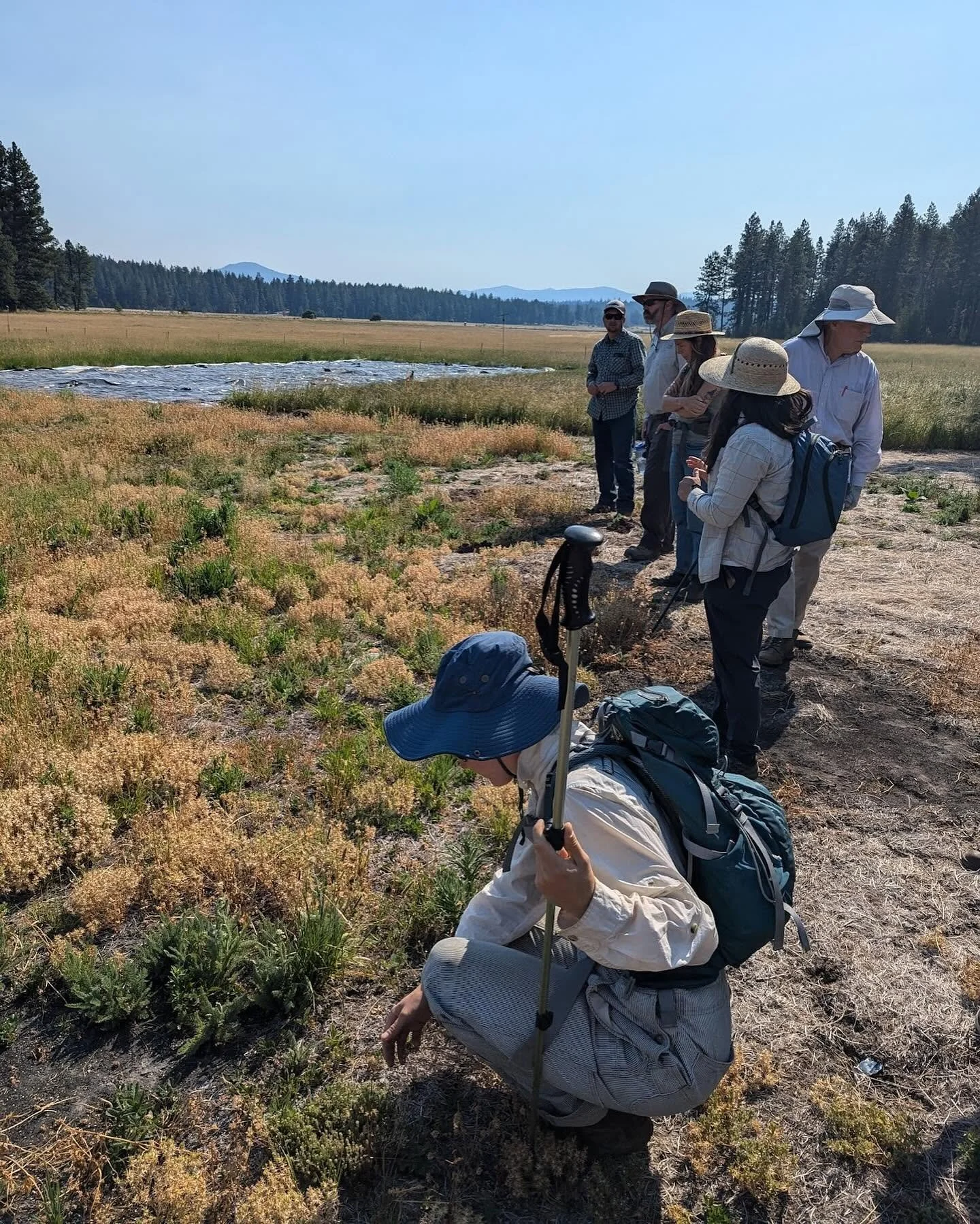
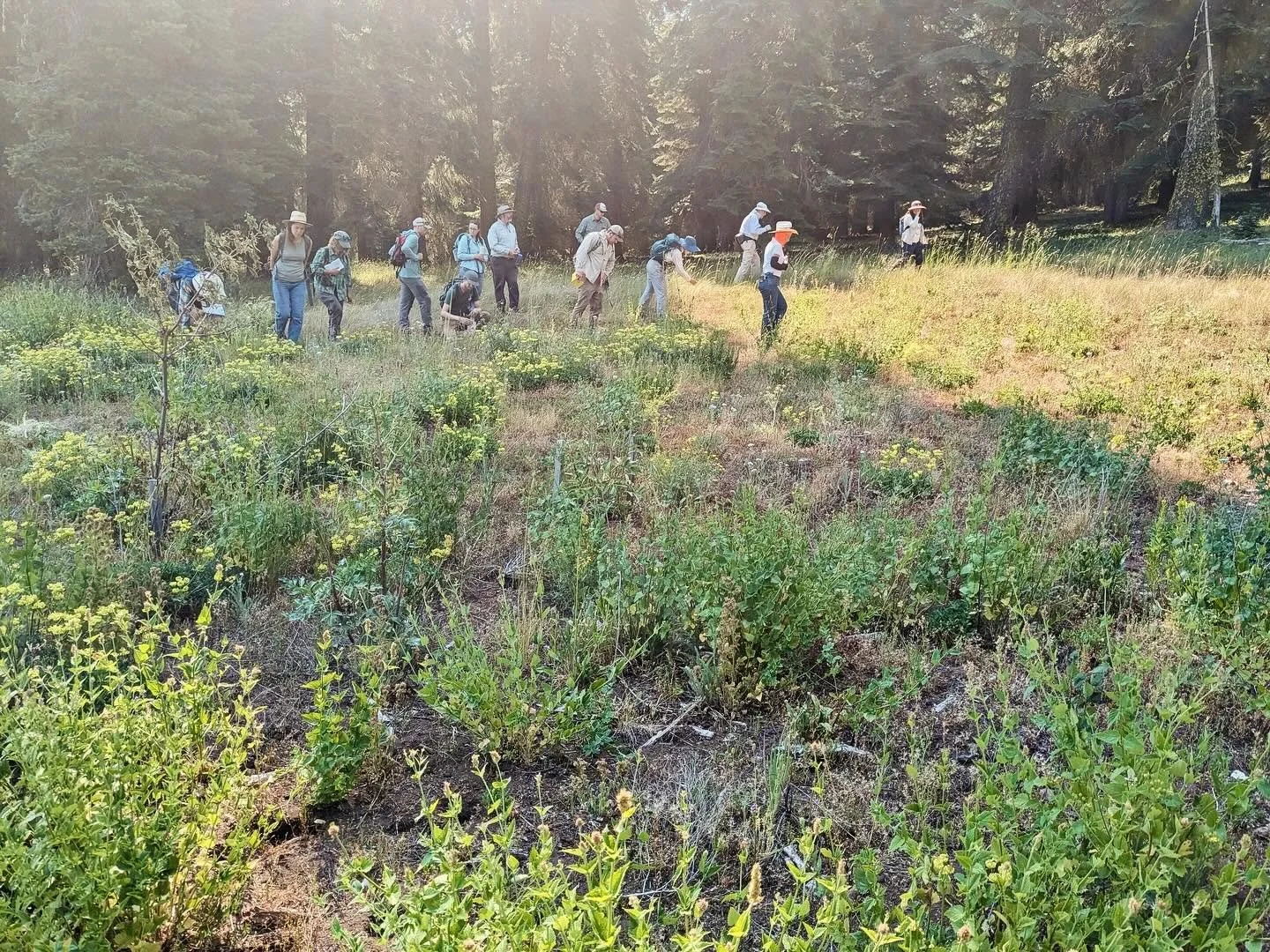
Touring a group of land managers through the areas that were tarped and seeded one year prior at Vesper Meadow.
Established forbs like Nettleleaf horsemint, Agastache urticifoloia and Sulfur buckwheat, Eriogonum umbellatum for pollinator habitat, three years post tarping and seeding.
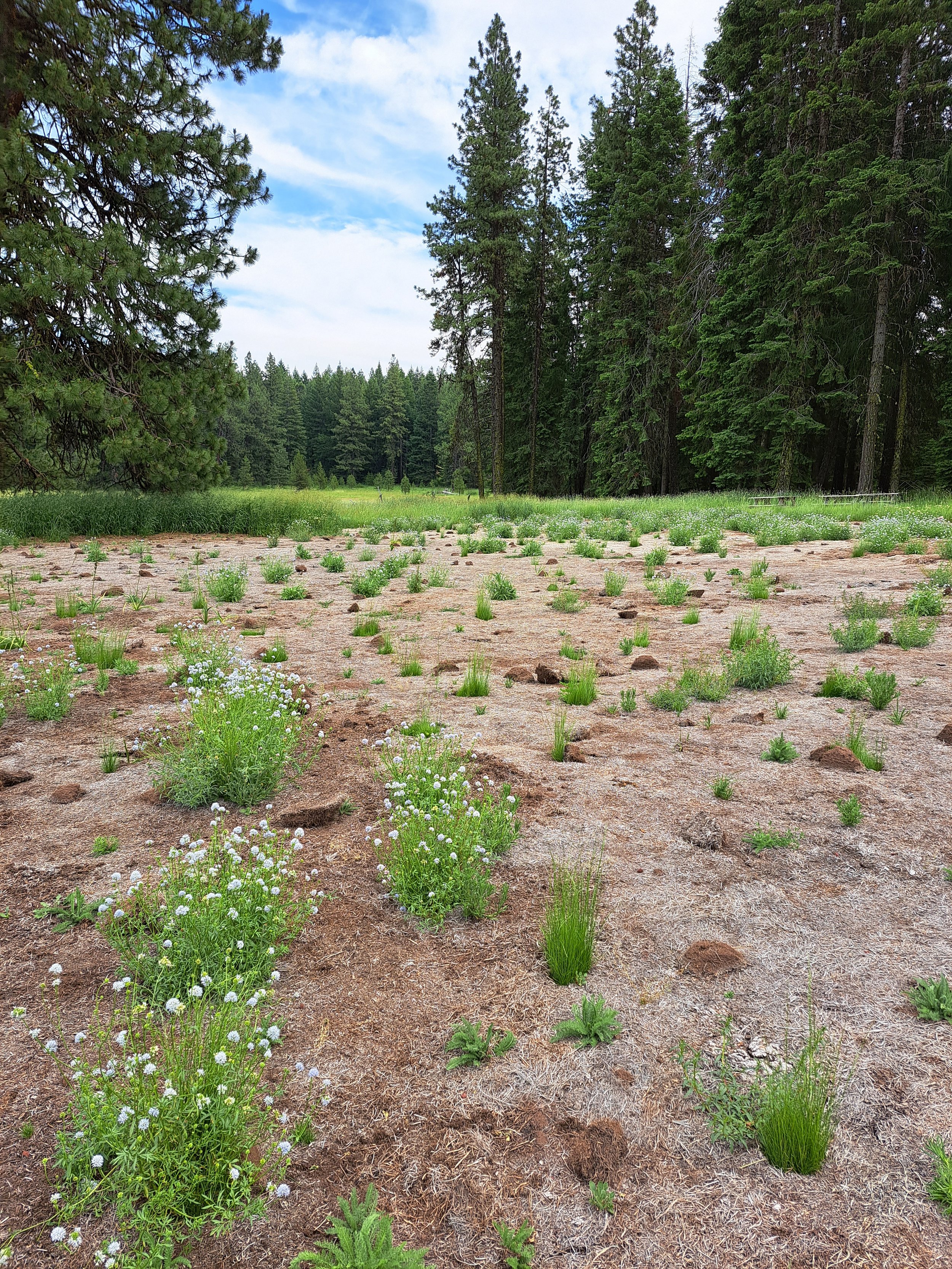
In a site where the underground thatch from the pasture grasses was extra thick, we experimente with digging holes and creating “divets” where seeds could make soil contact and germinate. The following spring (pictured above) there were bouquets across the area. In years that followed, the bouquets were able to reseed the surrounding areas.
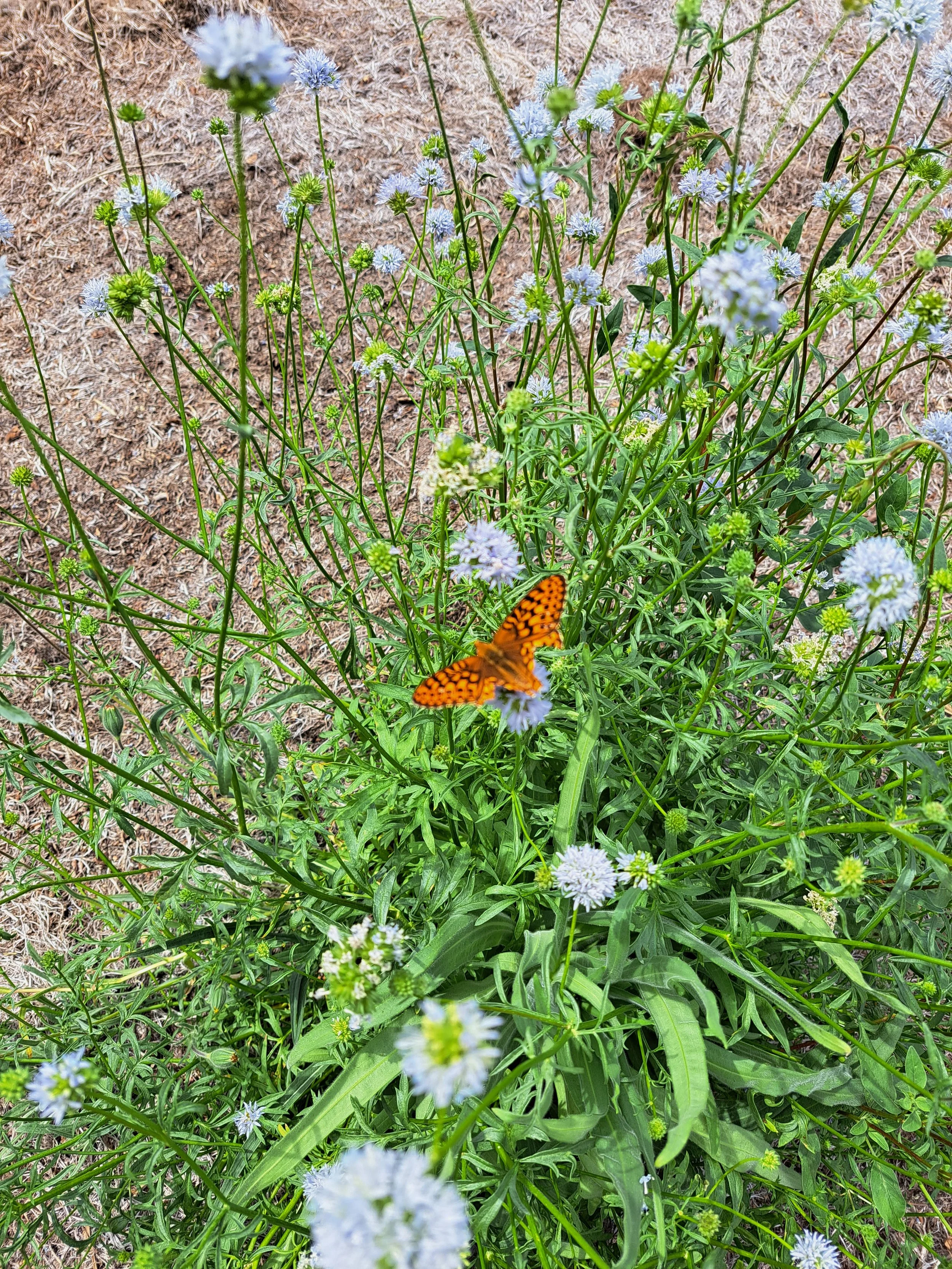
A Frittilary butterfly enjoying the fresh Bald headed gilia Gilia capitata flowers that emerged from the “divets” during the first spring after restoration seeding.
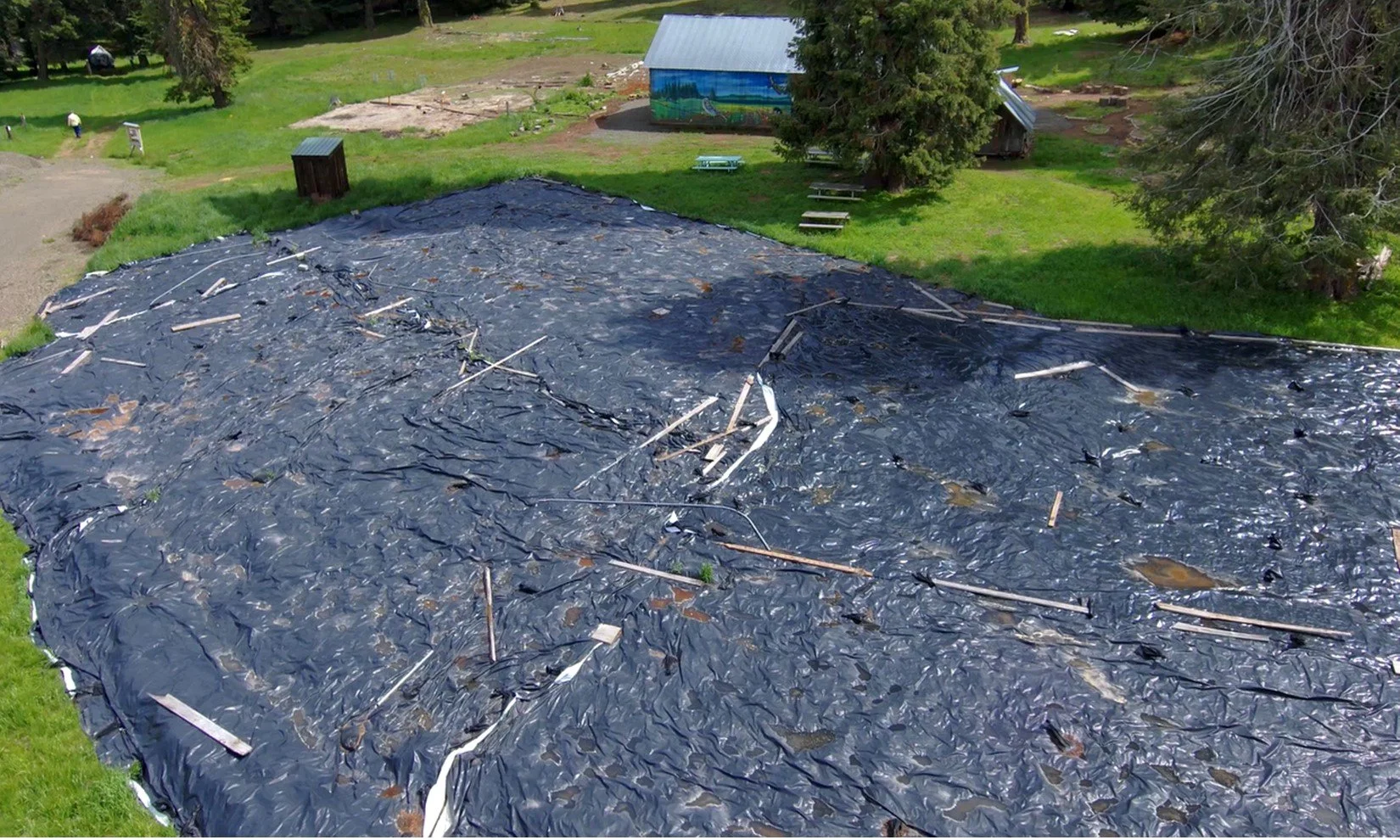
Barn entry and picnic area during the mass tarping of 2022. See picture to the right for post tarping.
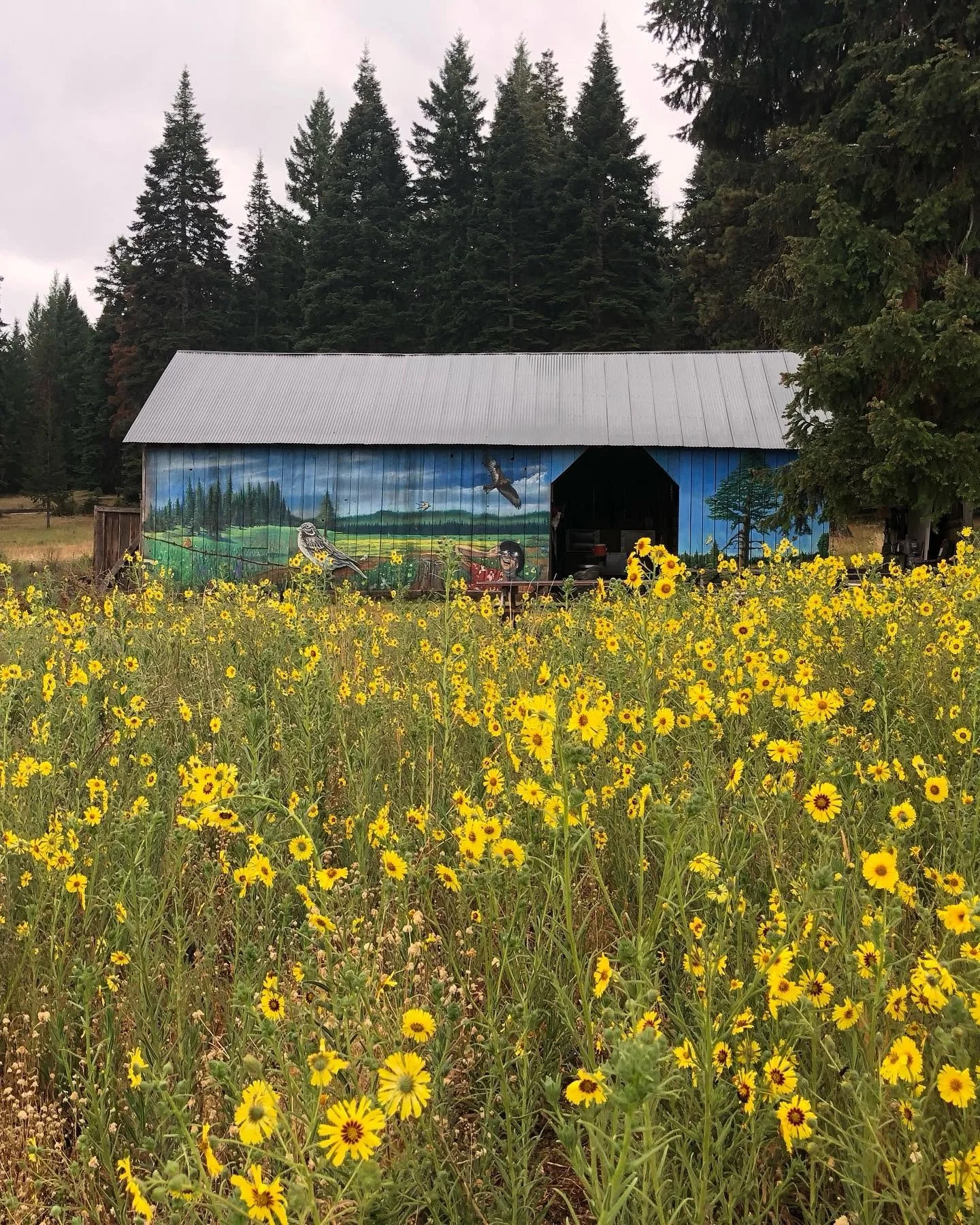
The barn entry and picnic area ablaze with flowers one year following the tarping and seeding of 2022. Pictured here is Elegant Tarweed, Madia elegans a beautifully aromatic sunflower-family plant that serves as pollinator habitat with a long bloomtime in the final months of summer and fall. It is a culturally important First Food of Native people including the local indigenous Takelma and Latgawa people and others who tended it with fire. These seeds were a mix of species designed to provide various blooms throughout the summer by our colleagues at The Understory Initiative.
Take this technique to your own community or backyard:
Simple Methods for gardeners and Landscapers
Occultation can work very well in a home garden, especially for preparing a new bed, clearing an overgrown area, or reducing weeds before planting. Here are some basics that we have learned over the years and recommend:
Cut or mow existing vegetation as close to the ground as possible. This will save you a lot of work after removing the tarp! Leave the plant material in place.
Water the area well if the soil is dry. Moisture encourages seeds and roots to become active before being deprived of light.
Cover the soil completely with a light-blocking material such as a black silage tarp , heavy opaque tarp, or several layers of sturdy cardboard. If you don’t use a heavy-duty silage tarp, make sure not to leave it out for much longer than a couple months because it may start disintegrating. Cardboard can be tricky to make sure the edges are well secured so light can't get underneath.We have also had issues with boxes that have lots of packaging tape peeling off and disintegrating in to the soil.
Leave it covered. For many annual weeds, several weeks may be enough; tougher perennial weeds generally require longer—often 6–8 weeks or more.
Remove the cover and inspect the area. Ideally, the vegetation underneath will have decomposed or died back substantially. Something we have thought about, but not tried, is to add compost tea, worms, or Bokoshi to accelerate decomposition…
Plant with minimal soil disturbance. Avoid deep digging or tilling, which can bring new weed seeds to the surface. This is going to be depending on your soil and the existing seed bank. Where we have experimented will a small handheld tiller, there was not much difference in weed regrowth, but also not much difference in desired seed growth (so you could save yourself the effort!)
For a vegetable garden, you can occultate beds after one crop is finished and before the next crop is planted. This allows you to suppress weeds while the bed is resting, without herbicides or extensive cultivation.
Come learn more about this prcoess through our upcoming hands on workshops this fall (and in years to come).