
Inspired by Vesper Meadow: making a meadow
Making a Meadow
guest post by Nancy Austin, Vesper Meadow board member
I moved to an old farmstead on the edge of Ashland in the summer of 2020, dropping into the unknown—a new climate, a new community, new flora and fauna. The back acre of our property, once an irrigated field, was a dense expanse of buttery yellow star thistle with needle-sharp spines.
Curious, I looked up yellow star thistle: invasive, drought-tolerant, an annual with a deep tap root. Commonly found in disturbed soils. A single plant can produce 10 to 50 flowers. Each flower forms many seeds that can remain viable in the soil for up to seven years. Difficult to eradicate.
My field had hundreds upon hundreds of plants, thousands of flowers, a gazillion seeds. Dismayed, I wanted these invasive plants gone. In spring I scanned the ground for rosettes of five gray-green leaves, pulling every young thistle plant I could find, my fingers bitter from thistle juice. In summer, the ground dried hard, and remaining thistles rooted too deep to pull. I began successive mowing to prevent flowering.
Each year, I pulled, mowed, sweated, and swore (those spines are sharp!), finding fewer thistles over time. What next? How could I encourage native plants and greater diversity? I’d read, but had no experience, of restoration work.
In the fall of 2022, I volunteered at Vesper Meadow with ten or twelve folks I didn’t know. Many, like me, were novices, but Vesper Meadow director Jeanine Moy explained that the meadow restoration was low tech and ongoing. The work would be done a bit at a time, by us, and others who would follow. We pulled away black tarps that had solarized unwanted pasture grass, loosely raked the bare soil, scattered seeds of native plants and covered them with a thin layer of straw. We talked and laughed and I was surprised by how easy it felt to do this work together.
On other visits I helped place tarps to expand the native planting further into the meadow and joined a late summer seed collection. I met new people each time. I saw that much could be done, quite simply, in stages that I could try in my own back field. Asking around, I learned about Klamath-Siskiyou Native Seeds and the Rogue Native Plant Partnership annual seed sale, both great resources for native seeds.
After a site assessment of the soil and aspect of my field, I ordered seeds. Blow wives, Oregon sunshine, Achillea, blue Gilia, Madia elegans, fiddleneck, vinegarweed, yarrow, Clarkia, gumweed, lupine, phacelia, Lemmon’s needlegrass, Roemer’s fescue. In the fall of 2023, as I had learned to do at Vesper Meadow—I scattered a mix of these annuals and perennials onto bare ground and covered them loosely with straw to overwinter. I waited and wondered. What would grow?
Everything. Volunteering at Vesper Meadow, I’ve learned that we can each be hands of nature, helping to heal land and each other. Each spring and summer I delight to see the native wildflowers and grasses I planted reappear and spread. Bluebirds and tree swallows have come to the field, slipping through the air as they catch insects. In April as I walked out into that old pasture that six summers ago was a mess of thistle, I realized that the field had become a meadow—an open place carpeted with small wonders.
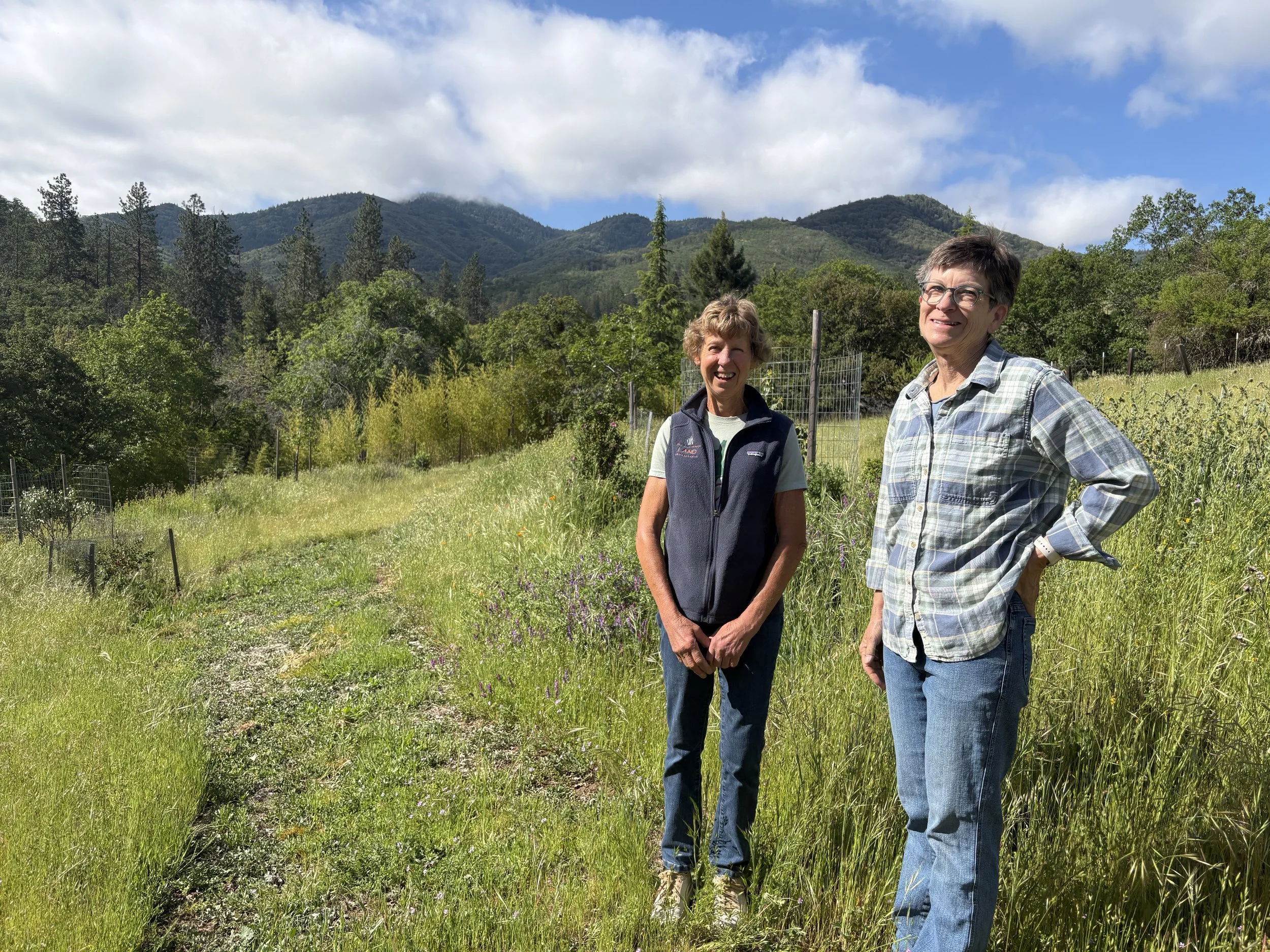
Thank you Nancy for contributing your story of inspiration from the Vesper Meadow vision!
Over the last few years Nancy has been a stalwart volunteer, contributing time toward restoration projects at Vesper Meadow, lending her expert skills in editing for our Fire Ecology and Human Relationship curriculum, and became a monthly supporter this year.
In September 2026 she joined our Board of Directors. Nancy Austin brings a lifelong commitment to environmental stewardship, along with decades of experience in publishing, creative leadership, and community engagement. Her connection to environmental work began with camping and backpacking and continued through environmental studies in college and volunteer and professional roles with organizations including Friends of the Earth, Earth Island Institute, The Nature Conservancy, Sierra Club Legal Defense Fund (now Earthjustice), and Yosemite Conservancy. During her career in trade book publishing, Nancy designed and art directed cookbooks, guidebooks, how-to books, and children’s books. She also managed and mentored a small art department at Ten Speed Press and coordinated the work of freelance creative professionals, developing skills in leadership, collaboration, communication, and project management.
Nancy and her husband, Andy Kahn, moved from the San Francisco Bay Area to Ashland in 2020, settling into an old farmhouse just weeks before the Almeda fire. Since then, she has become increasingly engaged in habitat restoration and environmental education in the Rogue Valley. She began volunteering with Vesper Meadow in 2022, contributing to native seed collection and restoration, fire ecology education, bird walks, willow cutting, and creative projects. The experience inspired her to restore habitat on her own property through native wildflower seeding and planting native trees and shrubs. Nancy also volunteers with the Ashland Food Project and participates in community and civic activities. She is especially drawn to organizations that connect ecological restoration, education, creativity, and community action, and she is excited to bring her experience, perspective, and commitment to that work as a board member of The Understory Initiative and Vesper Meadow.